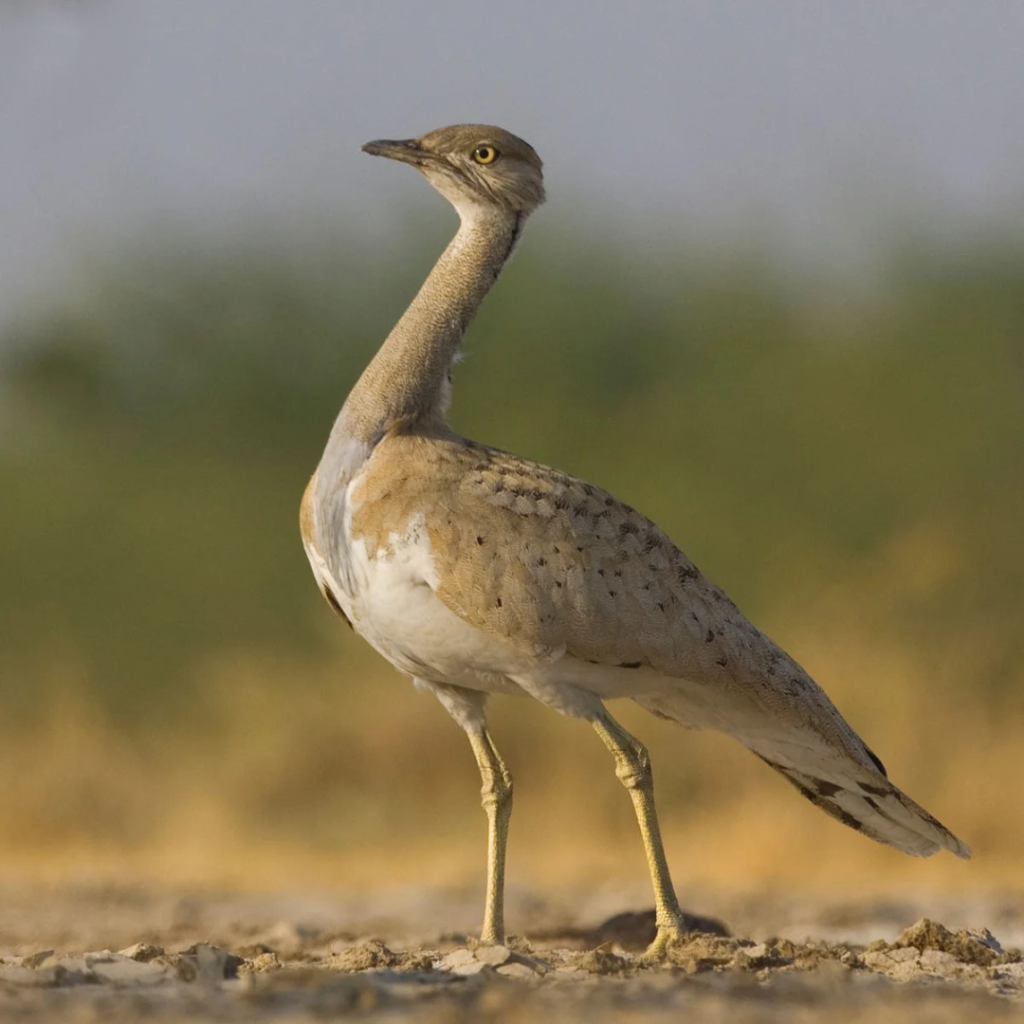
A medium-sized ground bird prized for its elegant appearance especially in falconry
Conservation Status | Endangered
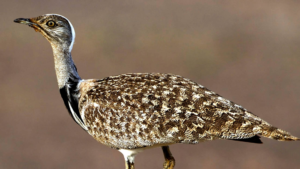
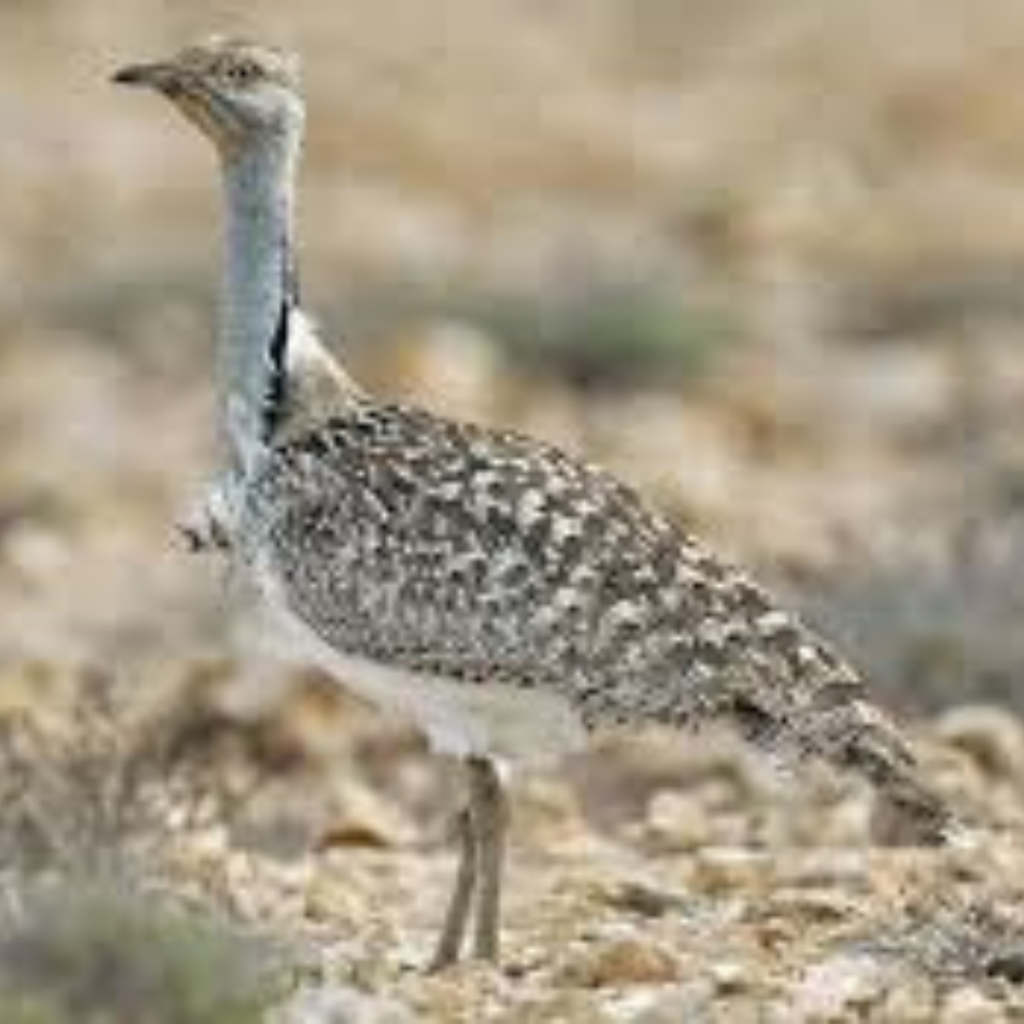
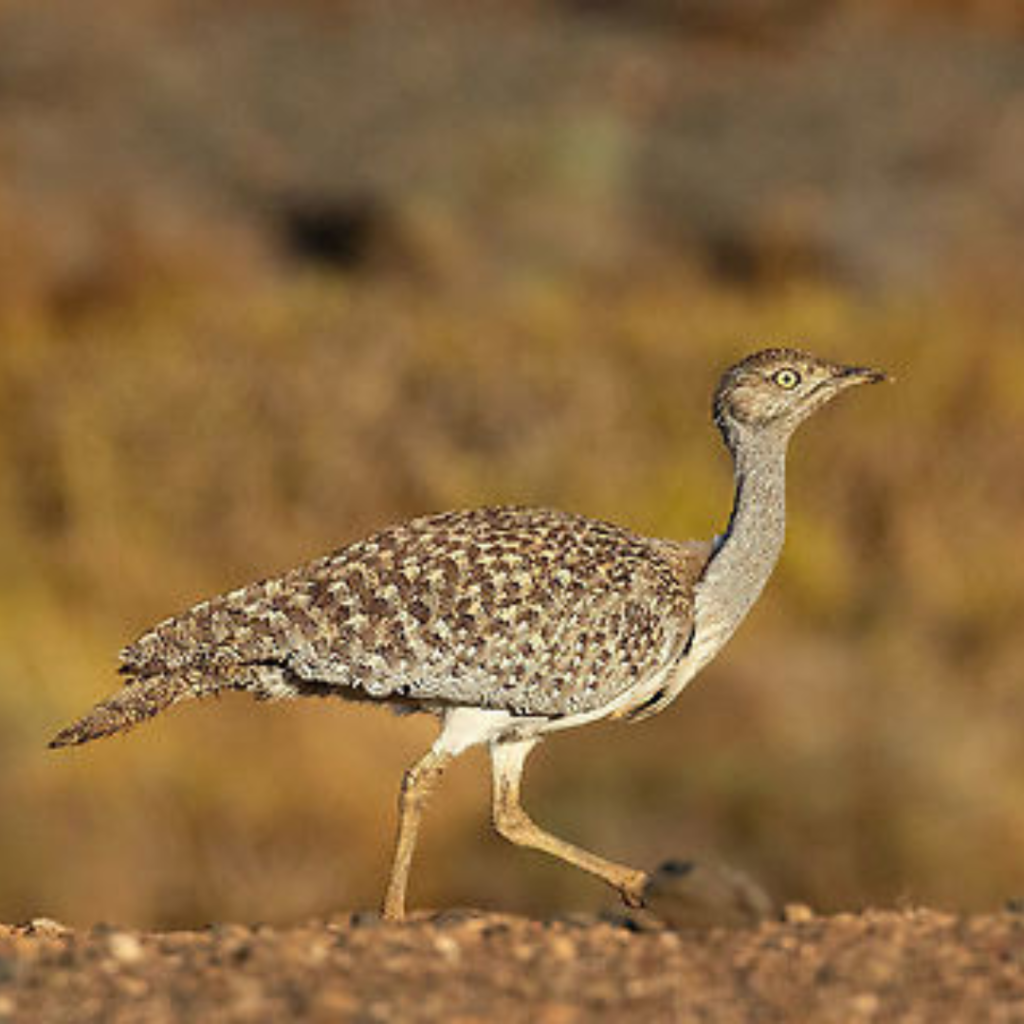
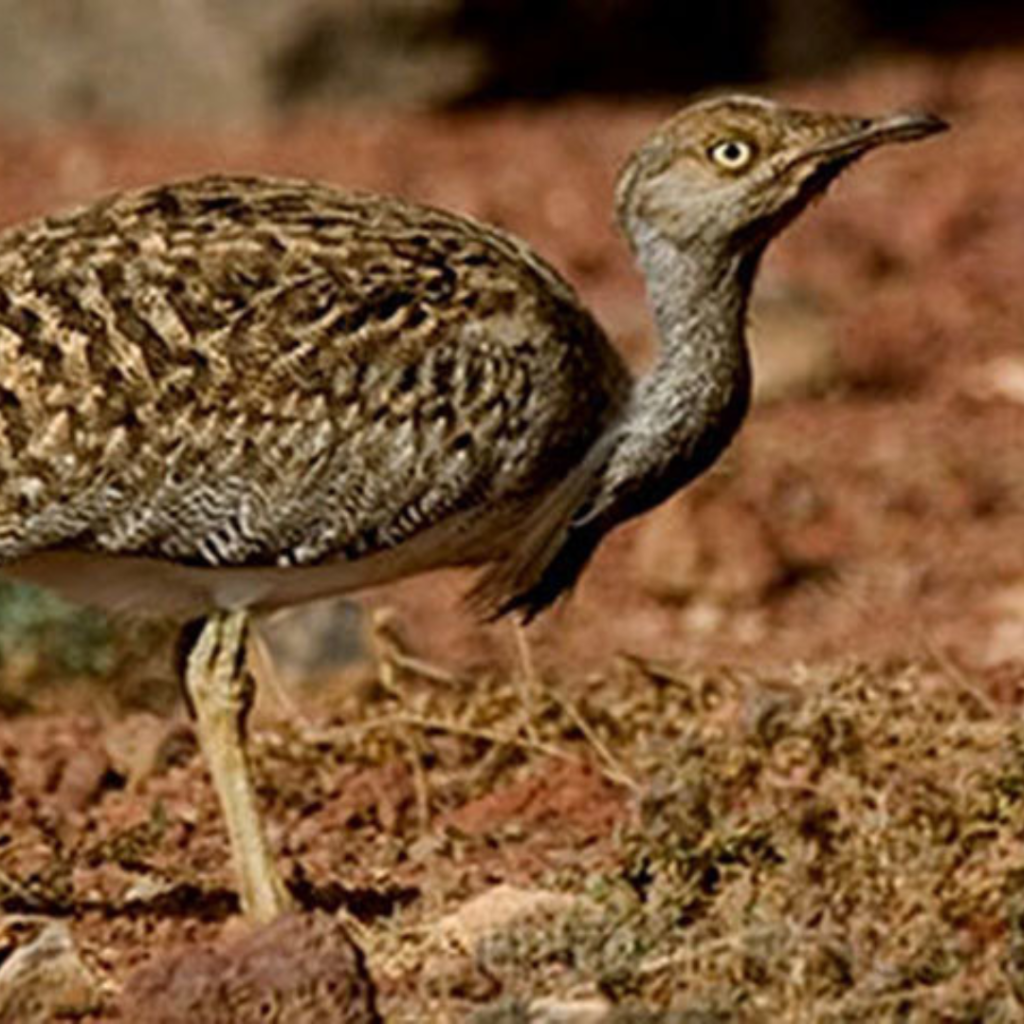
Known locally as “Tulai” (تلائي), the Houbara Bustard is a desert bird native to the arid and semi-arid regions of Pakistan. It is highly regarded in Middle Eastern cultures for traditional falconry hunting practices, which unfortunately has contributed to its decline. The bird is known for its distinctive plumage with mottled brown, black, and white feathers, allowing excellent camouflage in desert landscapes.
Habitat & Lifestyle Houbara Bustards prefer dry, open deserts, scrublands, and semi-arid areas with sparse vegetation. They are ground-dwelling birds that feed mainly on seeds, insects, and small reptiles. Mostly solitary or found in small groups, they display elaborate courtship displays during the breeding season. These birds avoid dense vegetation and are strong fliers when threatened.
Area Found In Pakistan, Houbara Bustards are mainly found in Balochistan’s vast desert areas such as the Chagai and Kharan districts, as well as parts of Sindh including the Thar Desert. The Cholistan Desert also provides suitable habitat. Conservation efforts include protected areas and breeding programs aimed at population recovery.
Quick Facts
Size: 65–75 cm in length
Weight: 1.5–3 kg
Appearance: Sandy brown body with black and white markings, long legs, and a distinctive head pattern in males during breeding season
Predators: Foxes, jackals, large birds of prey
Unique Fact: Houbara Bustards perform elaborate courtship dances where males puff up their feathers and create booming calls to attract females.
Did you spot a mistake or have more to add? Let us know! Your feedback helps Haewan keep information accurate and up-to-date.